Singapore Property Market Outlook 2025: Landed, Commercial and Industrial property
As we head into 2025, Singapore’s property market continues to show resilience amid global uncertainties. From institutional investors to private buyers, there is sustained interest in high-value real estate segments, particularly commercial property, industrial property, and landed property. This year, macroeconomic conditions, demographic shifts, regulatory recalibrations, and evolving investor preferences are reshaping the real estate landscape.
In this comprehensive outlook, we explore the key trends, opportunities, and risks to watch in 2025, especially for those considering buying commercial property in Singapore, expanding portfolios, or entering new asset classes.
Macro Trends Shaping the Market in 2025
1. Economic Recovery & Interest Rate Stabilisation
After years of volatility, global interest rates have begun to stabilise. Singapore’s GDP growth is projected at 2.5%–3.5% in 2025, driven by strong service exports, tech, and biomedical sectors. Stabilised interest rates will ease borrowing costs and may reignite investment activity, especially in large-ticket commercial real estate transactions.
2. Recalibrated Government Policies
With ongoing recalibrations in property cooling measures and land supply policies, the government continues to manage affordability and speculative demand. While the residential segment may face stricter loan limits, the commercial and industrial property sectors remain relatively free from such restrictions—making them more attractive to institutional and high-net-worth investors.
Monetary Authority of Singapore – Macroeconomic Review
➤ https://www.mas.gov.sg/publications/macroeconomic-review
3. Strategic Role of Real Estate in Wealth Preservation
For family offices and private investors, real estate remains a cornerstone of long-term wealth preservation. Landed property in prime locations and freehold commercial property continue to outperform, offering capital appreciation and income generation, especially in sectors with limited new supply.
Key Trends by Asset Class
Commercial Property – Growth Anchored in Transformation
Tanjong Pagar Shophouses & CBD Rejuvenation
The Tanjong Pagar shophouses market remains robust, with high demand from boutique firms, F&B brands, and investors seeking conservation assets with strong yield. With URA’s CBD Incentive Scheme boosting redevelopment, the Central Business District is seeing renewed life, enhancing the value of surrounding commercial buildings.
URA Central Area Transformation Updates
➤ https://www.ura.gov.sg/Corporate/Planning/Master-Plan/Central-Area
Increasing Demand for Strata Offices & Freehold Titles
There is a growing trend toward buying commercial property in Singapore that offers freehold tenure. HNWIs prefer strata-titled offices in Districts 1 and 7 due to their limited availability and high rental upside. Buyers are increasingly seeking guidance on how to evaluate commercial property value in Singapore before making significant acquisitions.
ESG & Green Buildings as Value Drivers
Sustainability is no longer optional. Investors are gravitating towards commercial property with green certifications. These assets enjoy higher tenant retention, lower maintenance costs, and premium valuations. New developments are expected to align with the BCA Green Mark 2025 standards.
Industrial Property – The Underrated Performer
Strategic Location Driving Value
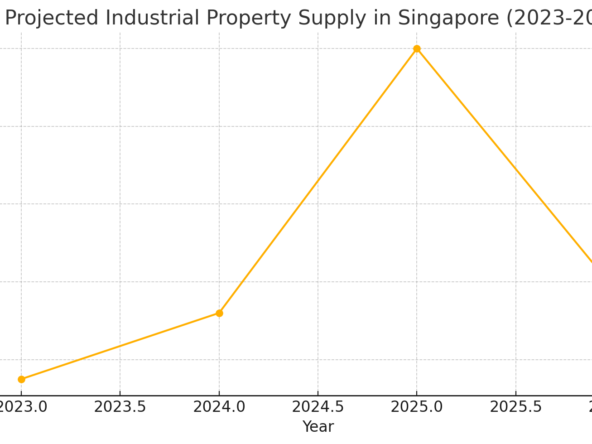
Industrial Property in mature estates like Tuas, Jurong Innovation District, and Woodlands continues to attract attention from logistics, biotech, and manufacturing players. The industrial price index rose by 5.2% YoY in Q1 2025, signalling robust demand and limited upcoming supply.
Best Areas for Industrial Property Investment in Singapore
Prime areas to watch include:
- Tuas Biomedical Park – Ideal for pharma and life sciences
- Jurong West – Excellent for logistics and warehousing
- Woodlands North Coast – Growth potential with cross-border connectivity
Rise in Institutional-Grade Industrial Assets
With the rise of REIT activity in Singapore, institutional investors are eyeing high-spec warehouses and data centres. These assets command high yields and are aligned with long-term tech and logistics trends.
Landed Property – A Supply-Constrained Opportunity
Freehold Land Remains King
Singapore’s landed property segment remains one of the most supply-constrained and coveted. As URA continues to restrict new land releases, prices in the good class bungalow area Singapore such as Nassim, Cluny, and Binjai have remained resilient.
Wealth Migration Driving Demand
Singapore continues to attract global wealth migration, especially from North Asia and Europe. Many of these buyers are seeking multi-generational homes and value the legacy component of landed homes, particularly GCBs.
Investment Opportunities in 2025
Commercial Property Investment: Smart Strategies
- Diversify into F&B-centric Shophouses in D1-D3 areas
- Evaluate Commercial Property Value using rental yield benchmarks, asset condition, and location potential
- Understand the guide to commercial property taxes in Singapore including SSD, ABSD exemptions for entities, and GST on commercial property sales
Redevelopment Potential of HDB Shophouses
Older HDB shophouses with mixed-use zoning present a compelling redevelopment opportunity. These properties are increasingly sought after by savvy investors who understand how to unlock value through repositioning and tenancy upgrades.
Industrial Sector Outlook: Long-Term Growth
- Secure assets with long land tenures
- Look for master-planned estates with upcoming infrastructure upgrades
- Partner with REITs or developers to gain exposure to logistics hubs
Landed Property: Legacy and Yield Combined
- Buy into underpriced GCB Areas in Seletar and Holland
- Consider rebuilds or A&A (Additions & Alterations) to extract further value
- Evaluate zoning potential near MRT stations for upside potential
Risks and Considerations for 2025
1. Global Geopolitical Uncertainty
Geopolitical tensions, especially in East Asia and the Middle East, may affect investor sentiment. However, Singapore remains a safe haven in Asia.
2. Construction Delays and Labour Constraints
Although easing, supply chain and manpower issues could impact project timelines and costs. Investors should factor in buffer periods for asset repositioning or development.
3. Climate and ESG Regulations
With increased scrutiny on carbon emissions, non-compliant properties may face valuation risks. Investors should focus on retrofitting older commercial buildings and ensuring sustainability compliance.
Final Thoughts: Navigating 2025 with Strategy
The Singapore property market in 2025 presents a dynamic environment rich in opportunities—if approached strategically. With stabilising interest rates, evolving regulatory clarity, and resilient demand investors should act with clarity and confidence.
ERG Singapore stands ready to guide you through every phase of the acquisition, leasing, or repositioning process. Whether you’re evaluating a shophouse in Singapore, looking at commercial property for sale, or planning entry into the industrial space, our expertise ensures your decisions are informed, profitable, and future-proof.
Other Articles that you might be interested
- Top 5 Residential Districts for Capital Appreciation in 2025
- Which Property Types Will Outperform in 2025? Landed, Condo, or Commercial Property?
- Singapore Property Market Outlook 2025: Key Trends, Risks & Opportunities
- Singapore Property Market 2025: Growth Slows as Buyers Reassess
- Singapore Industrial Property Outlook 2025: Navigating Opportunities Amidst Market Shift